
Happy Valley City Directory Collections
There is no verified Happy Valley-specific city-directory year run in the official online sources reviewed for this project. That is the central fact for a careful search. Happy Valley Library offers current reference help, a genealogy-group route, and referrals, but it does not publish a confirmed historic city or reverse-directory inventory online. The right approach is to identify collections that document the surrounding Clackamas and Portland region, state clearly what each one covers, and ask staff before treating a volume as local evidence.
| Collection | Years or scope | Where held | Access |
|---|---|---|---|
| Happy Valley Library directory referrals | No Happy Valley-specific run verified online | Happy Valley reference desk | Ask about regional telephone books, microform referral, LINCC, and interlibrary loan. |
| CCFHS / Wilmer Gardner Research Library | No exhaustive date run published online | Oregon City | Free access, donations appreciated; call before a special trip. |
| Portland directory volumes and reverse guide | Portland directory began 1863; reverse section from 1930 forward | Multnomah County Library | Use only after a person or address is verified within the volume’s coverage. |
| State Archives territorial deed index | 1850-1859 | Oregon State Archives guide and microfilm | County land trail alternative for the settlement era, not a municipal directory. |
| CCHS digitized photo collection | More than 10,000 images; dates vary | Online historical collection | Search names, places, and landmarks as supporting evidence. |
A blank local run is not a reason to label Portland volumes as Happy Valley directories. It is a reason to use a broader collection only when its geographic coverage is established.
Happy Valley City Directory Coverage Gap
Happy Valley incorporated in 1965. Before then, the landscape was rural and could be filed under Clackamas County, a road or rural route, a land description, or another local name. The documented regional directory method is useful, but it has an important limit: Multnomah County Library’s Portland reverse section is a method for verified Portland coverage. It does not prove that every Happy Valley address belongs in those books. Check the target volume, ask library staff, and record the basis for treating a particular listing as geographically relevant.
Where no directory is verified, use the fallback chain the research supports. Start with Happy Valley Library reference staff. Then ask the Clackamas County Family History Society about maps, microfilm, obituary clippings, donated family histories, and surname or subject vertical files. For the earliest land period, consult the Oregon State Archives territorial guide and the County Recorder trail. This preserves the difference between a confirmed listing and a research lead.
Note: An address in a Portland directory is evidence only after its place and street coverage are confirmed for that edition.
Happy Valley Names Before 1965
The City’s historical material gives several search terms that can recover records missed by a modern-name search: Deardorff Settlement, Deardorff Valley, Happy Hollow, Christilla Valley, and East Mount Scott. It places Happy Hollow on County surveyor maps in 1912 and 1926, and identifies Happy Valley in acreage advertisements from 1909. A person or property can therefore appear under a place name that a modern map no longer emphasizes.
Combine the historic term with a surname, nearby landmark, township-range-section, legal description, or road form. The City’s incorporation date divides municipal material from the deeper county record trail. Older land research may need the Clackamas deed indexes, donation-land-claim materials, historical maps, or local vertical files instead of a municipal directory. The aim is not to force every early record into a local annual volume, but to preserve the original place vocabulary while checking the same person or property across sources.
Happy Valley City Directory Library Referrals
Happy Valley Library is the local starting point for an in-person referral. Its published community information lists a general desk, a reference desk, catalog and program access, and a long-running genealogy group. The online material does not verify a historic local directory shelf. Ask the reference desk about a particular suburban or Portland-area telephone book, Oregon-history source, microform referral, interlibrary-loan option, or LINCC location that may hold the needed edition.
The official library page documents the local reference route rather than a claimed Happy Valley directory run.
A staff referral can prevent a long search in a volume that does not cover the target address or period.
Happy Valley Regional Research Library
The documented deeper regional collection is the Clackamas County Family History Society research library in the Wilmer Gardner Research Library, first floor of the Wallace B. Caufield Memorial Building in Oregon City. Its holdings include books, microfilm, maps, donation land claims, biographical material, unindexed Clackamas births, marriages, deaths, and burials, local-obituary clippings, county hospital records, family histories, and vertical files. These are Clackamas research materials, not a verified city-directory year run, but they are valuable companions when a directory listing is absent or ambiguous.
The published access information says entry is free with donations appreciated. Librarians answer by phone on Wednesdays, and the published hours are Wednesday and the first and third Saturdays when the museum is open. The source also carries an older appointment note, so call before a special trip.
The Family History Research Library holdings page is the source for this Oregon City collection.
Use the library’s maps and vertical files to test older place names and land descriptions alongside any confirmed directory entry.
Search Happy Valley City History Photographs
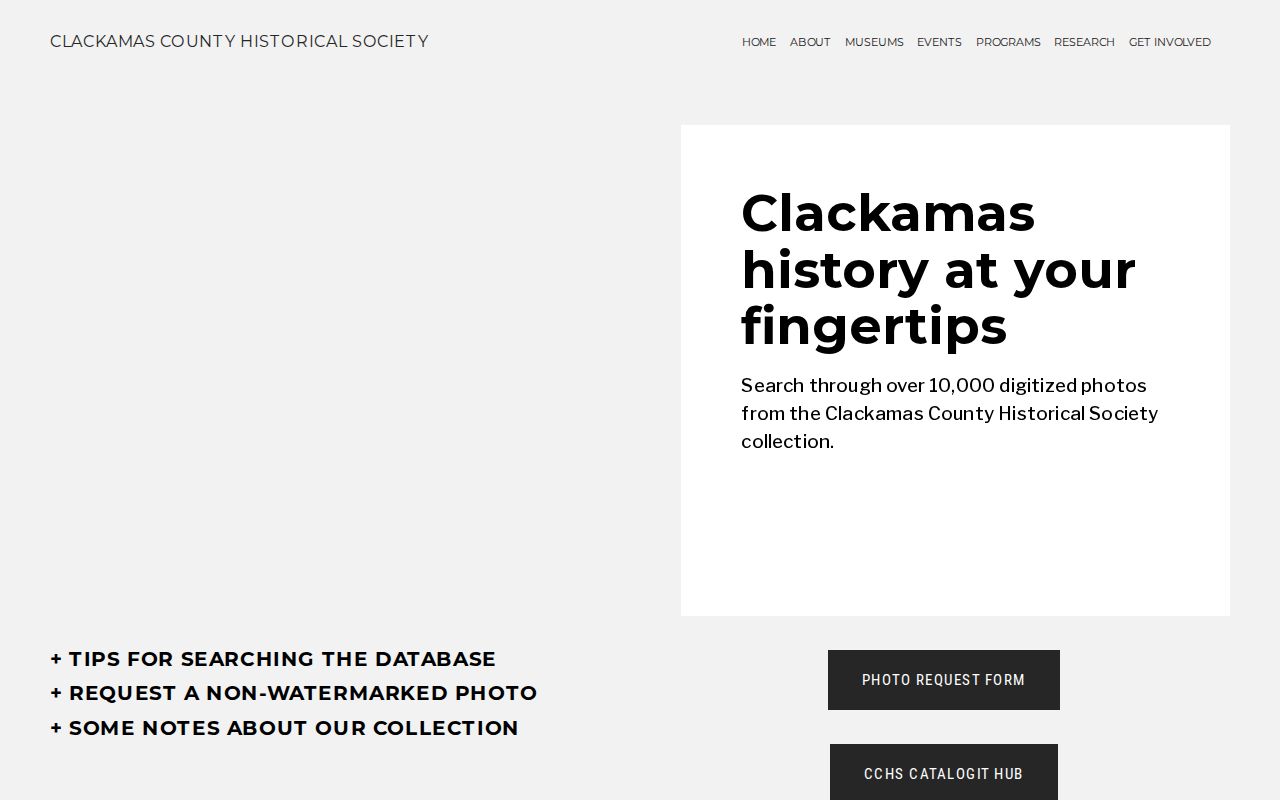
The Clackamas County Historical Society digitized collection provides a second route when a historical listing search is thin. It has more than 10,000 digitized photos and supports useful search choices: quotation marks for an exact phrase, a plus sign to join terms, and an asterisk as a wildcard. Try an exact phrase such as "Happy Valley", then test combinations such as Deardorff+Happy or a partial historic name.
Volunteer-created descriptions can contain errors, according to the collection. Treat captions as leads and cross-check them against a map, deed, obituary clipping, or dated directory listing. A photo can place a family, road, landmark, or older community name in context, but it should not replace the record that confirms the fact being claimed.
The Historical Society collection search shows its exact-phrase, plus-term, and wildcard methods.
The image collection is especially useful for reconciling a historic place name with a familiar modern location.
Reading a Regional City Directory Entry
The verified sample format is regional and Portland-specific. Multnomah County Library’s directory guide describes a name-arranged section, a classified business directory, and a government or organization section. From 1930 forward, the reverse Street and Avenue Guide is arranged by street, block, then address, with an abbreviated occupant or business listing. The alphabetical entry may provide a home address and sometimes an occupation, an associated business, or a business ownership detail. Do not assume a spouse notation, owner mark, or abbreviation key unless the exact volume shows one.
| Name-arranged entry | Finds the alphabetical listing for the named person or business when it appears in that volume. |
|---|---|
| Address | The alphabetical entry may show a home address; the reverse guide starts with street, block, then address. |
| Occupational or business detail | May appear in an alphabetical entry, but is not promised for every listing. |
| Spouse or owner notation | Not verified in the inspected guide. Read the specific volume rather than infer a symbol. |
| Reverse listing | An abbreviated occupant or business listing for a covered street address, often in pink or green pages. |
- Criss-cross directory
- A reverse, street-order section. Here, the documented Portland guide runs street to block to address.
- Householder index
- A name-arranged route to a listed household. The inspected regional guide calls this the alphabetical name section.
- Abbreviation key
- A volume-specific legend for short forms. The exact keys were not inspected, so read and preserve the key from the volume in hand.
Trace Happy Valley City Directories Across Years
A Happy Valley historical listing trail is a comparison process, not a single search result. Once a regional volume has verified coverage, record the listing exactly as printed before trying to modernize it. The public federal census reaches 1950 as of the research date and is a household snapshot, not a continuous directory. Pair the nearest census with a directory year, then use county land records, newspaper material, probate or death records where lawful, and local obituary clippings to test a move, a name variant, or a disappearance.
- Confirm that the target address or locality is inside the directory volume’s geographic coverage.
- Copy the name spelling, street form, address, and every abbreviated detail exactly as printed.
- Use the reverse section, when present and applicable, to compare the street, block, and address with the alphabetical entry.
- Pair the closest directory year with the nearest public census, keeping in mind that the census is only a dated household snapshot.
- Test changes with Clackamas deeds, maps, obituary clippings, and historical place-name searches before deciding that two similar entries are the same person.
A disappearance can mean a move, death, omission, a different spelling, or a change in coverage. It is a prompt for another source, not a conclusion.
Happy Valley Records Timeline
The verified timeline describes the record setting, not a local directory publication run. It helps decide which repository should be checked first.
- 1850: Clackamas donation-land-claim entries and the territorial deed-index era begin in the documented State Archives trail.
- 1850-1859: The State Archives identifies Clackamas deed indexes, with deed records for 1855-1859.
- 1863: The documented first Portland directory began with S. J. McCormick.
- 1909: The City history identifies Happy Valley acreage advertisements, while other historic names continued in local use.
- 1912 and 1926: County surveyor maps used Happy Hollow.
- 1965: Happy Valley incorporated as a City.
Portland’s reverse Street and Avenue Guide is documented from 1930 forward, but each address still needs a coverage confirmation.
Happy Valley Historical Trail Endpoints
When a directory entry reaches the end of a person’s visible trail, use local collections that match the question. CCFHS holds obituary clippings, maps, microfilm, donation-land-claim materials, unindexed county vital and burial material, and vertical files. Christilla Pioneer Cemetery is another place-history lead. The City says it was established in 1852, has 29 marked graves, and reopened to the public after restoration in 2025. It is not a searchable interment database.
For address-era research, a property chain may be stronger than a directory. The Clackamas Recording Division says its recorded land trail reaches to the early 1850s, while City permit and planning material can help with much newer development. Modern address-keyed sources are handled on the Happy Valley by-street record page, leaving historical volumes for their proper regional role.